
Malaysia Residential Property Market Analysis 2025: Trends, Prices, and What to Expect
Key Takeaways
- Urbanization Drives Demand: An increase in internal migration and city growth is accelerating the need for integrated living environments.
- Green & Smart Homes Rise: Sustainable and technology-driven homes are gaining attention among new and younger buyers.
- Strategic Regions Bloom: Areas like Klang Valley, Penang, and Iskandar Malaysia offer strong investment prospects as infrastructure projects scale up.
Market Overview
Malaysia’s residential property market is expected to undergo significant shifts in 2025, driven by urban expansion, supportive government policies, and buyer lifestyle transformations. These elements collectively shape evolving buyer patterns and introduce new strategies for investors and developers.

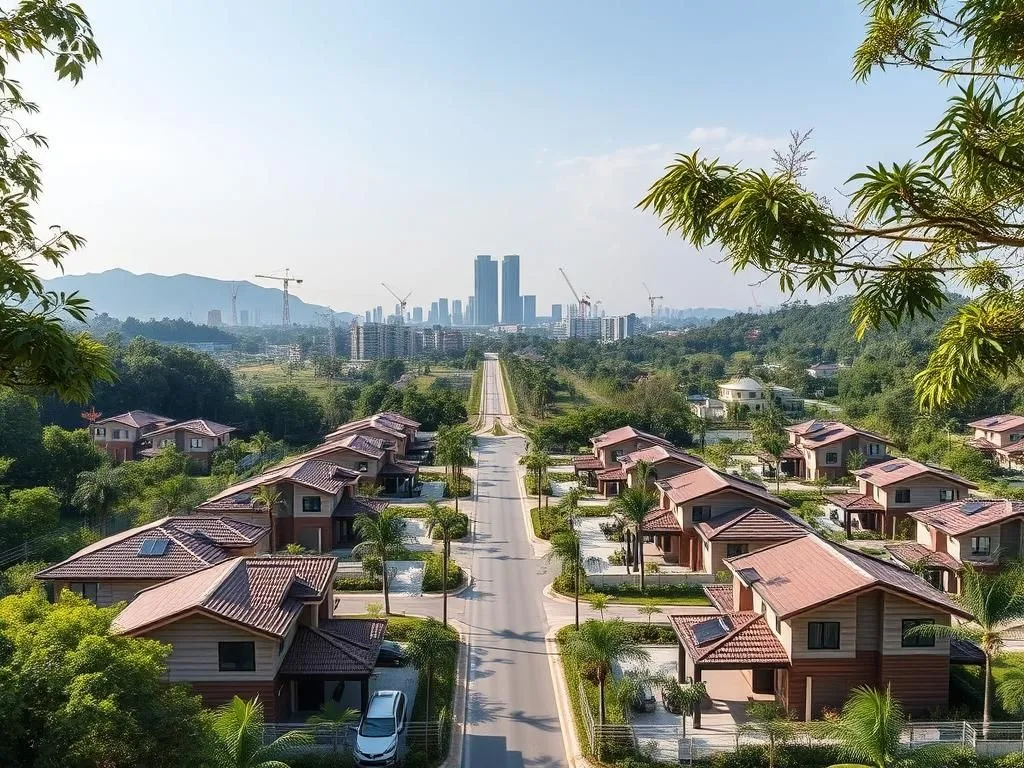
Key trends, growth sectors, and investment directions are visualized across various regions of Malaysia’s residential landscape
A Market on the Move
Malaysia's residential sector has shown consistent price increases over the past decade—especially in regions like Selangor and Kuala Lumpur—indicating long-term stability and confidence among stakeholders1.
To track recovery phases or downturn risk, analysts consult real-time indexes capturing quarterly fluctuations in home values nationwide2.
Why Prices Are Trending Up
The upward price momentum stems from robust GDP performance, middle-class demand, and affordability initiatives that incentivize developers to build homes tailored to evolving demographic and socioeconomic expectations3.
With improving inflation trends, accessible loan rates, and business recovery in motion, younger professionals and first-home seekers are emerging as key market drivers4.
Urban Living is Redefining Demand
Integrated communities featuring housing aligned with public transport access and lifestyle offerings are gaining popularity in Malaysia’s urban hubs5.
The preference for mixed-use developments over isolated residential spaces is leading developers to adopt more sustainable spatial planning strategies6.
The Rise of Smart, Green, and Resilient Homes
Climate adaptation is shaping property blueprints, with green rooftops, flood-tolerant materials, and energy-efficient systems becoming standard in newer residential launches7.
Spotlight on Buyer Behavior in 2025
Millennials and Gen Z homebuyers are reshaping demand with a preference for smaller units, modular layouts, and digital-first amenities like smart locks and app-based facilities management8.
Strategic Investment Zones to Watch
Greater KL, Johor’s Iskandar, and Penang are seeing substantial attention due to project pipeline expansions, MRT accessibility, and digital-focused smart city plans9.
Modern forecasting models allow investors to precisely target such high-return sectors using AI, market segmentation, and spatial growth analytics10.
Malaysia’s Property Market Outlook: Mid-Year Review Snapshot
Midway through 2025, suburban hotspots are seeing spikes in activity, while premium properties remain subdued amid affordability concerns and rental pressure11.
Forecasts Point to Long-Term Resilience
Experts forecast a 3%–5% compounded annual rise in home values through 2030, especially in regions where affordability meets infrastructure-led urbanization12.
Opportunities, But Also Challenges
Oversaturation in luxury condos, income stagnation among youth, and climate-vulnerable zoning still present caution flags for stakeholders navigating Malaysia’s complex housing terrain.
Final Thoughts
Buyers should look toward transit-linked, mid-cost smart homes; renters have room to negotiate in dense supply clusters; and investors can gain long-term resilience in infrastructure-integrated geographies with sound planning and data analytics.
Data tools and predictive evaluations will continue playing a crucial role in shaping Malaysia’s property choices in the years to come.
Frequently Asked Questions
Question: What property types are millennials and Gen Z most interested in for 2025?
Answer: They’re looking for smaller, flexible layouts with digital amenities, suitable for remote work and social urban lifestyles.
Question: Which Malaysian cities are expected to have the most growth in residential projects by 2025?
Answer: Greater Kuala Lumpur, Iskandar Malaysia (Johor), and Penang are set to lead growth due to their infrastructure investments and economic activity.
Question: How are environmental concerns influencing homebuyer preferences?
Answer: Increasing flood risks and climate change are prompting buyers to prioritize homes with sustainable features and resilient design elements.
Disclaimer: The information is provided for general information only. JYMS Properties makes no representations or warranties in relation to the information, including but not limited to any representation or warranty as to the fitness for any particular purpose of the information to the fullest extent permitted by law. While every effort has been made to ensure that the information provided in this article is accurate, reliable, and complete as of the time of writing, the information provided in this article should not be relied upon to make any financial, investment, real estate or legal decisions. Additionally, the information should not substitute advice from a trained professional who can take into account your personal facts and circumstances, and we accept no liability if you use the information to form decisions.