

Islamic Home Financing in Malaysia: A Growing Path to Sharia-Compliant Property Ownership
Key Takeaways
- Sharia-Compliant Model: Islamic home financing avoids interest and uses ethical, asset-based contracts.
- Consumer Influence: Religious preference, trust in institutions, and transparency guide homebuyer choices.
- Market Innovation: New contract types and ethical benchmarks like House Price Index are shaping future offerings.
Introduction
For many Malaysians, buying a home is the ultimate financial goal. But how you finance that dream can be just as important as what you buy—especially when religious values come into play. This is where Islamic home financing enters the picture. Offering an alternative to traditional interest-based loans, Islamic financing aligns with Sharia principles and is rapidly reshaping the housing landscape in Malaysia.
In this in-depth article, we explore the key differences between Islamic and conventional housing loans, the evolving product offerings from banks, market trends, consumer decision-making, and the call for systemic reform across the industry.
Let’s dive into the world of Islamic home financing.
What Is Islamic Home Financing?
Islamic home financing provides a Sharia-compliant alternative to conventional housing loans. Unlike traditional mortgages that charge interest (riba), Islamic financing prohibits riba and involves different contract structures such as Murabahah (cost-plus sale), Ijara (leasing), and Musharakah (partnership)1.
A community analogy explains it well—it’s like paying in installments for a phone bought from a retailer, rather than borrowing money from a friend with interest2.
The Principles Behind Sharia-Compliant Financing
Fundamentally, Islamic home financing is built on:
- Avoidance of Riba (Interest): Sharia strictly forbids the charging of interest.
- Risk Sharing: Both the bank and borrower share the risks and benefits.
- Transparency and Justice: Terms must be clear, fair, and agreed upon by both parties.
- Asset-Backed Contracts: The financing must involve tangible assets (like property), not speculative investments.
How Islamic Housing Loans Work
Let’s break down a popular model: Commodity Murabahah. Under this scheme, the bank purchases an underlying asset (often a commodity) and sells it to the applicant at a marked-up price. This price is paid in installments over an agreed tenure3.
Other available models in Malaysia include Bai Bithaman Ajil (deferred sale), Ijara Muntahia Bittamlik (lease-to-own), and Musharakah Mutanaqisah (diminishing partnership)4.
Benchmarking with the House Price Index
To reduce reliance on interest-rate-based benchmarks, some Islamic financial products are exploring the use of indices like the House Price Index (HPI) to measure and adjust profit rates over time5.
What Do Consumers Look For?
A survey of Muslim consumers in Malaysia highlighted trust, transparency, and affordability as key drivers for choosing Islamic mortgage solutions6.
Rich Evidence from Real Experiences
Interviews with borrowers uncovered consistent praise for Islamic home financing’s ethical alignment, though many also voiced frustration with contracts that felt too similar to conventional loans in practice7.
What Drives Adoption?
Awareness campaigns, word-of-mouth within Muslim communities, and high levels of confidence in Islamic banks continue to fuel adoption alongside religious duty8.
Market Share and Product Distribution
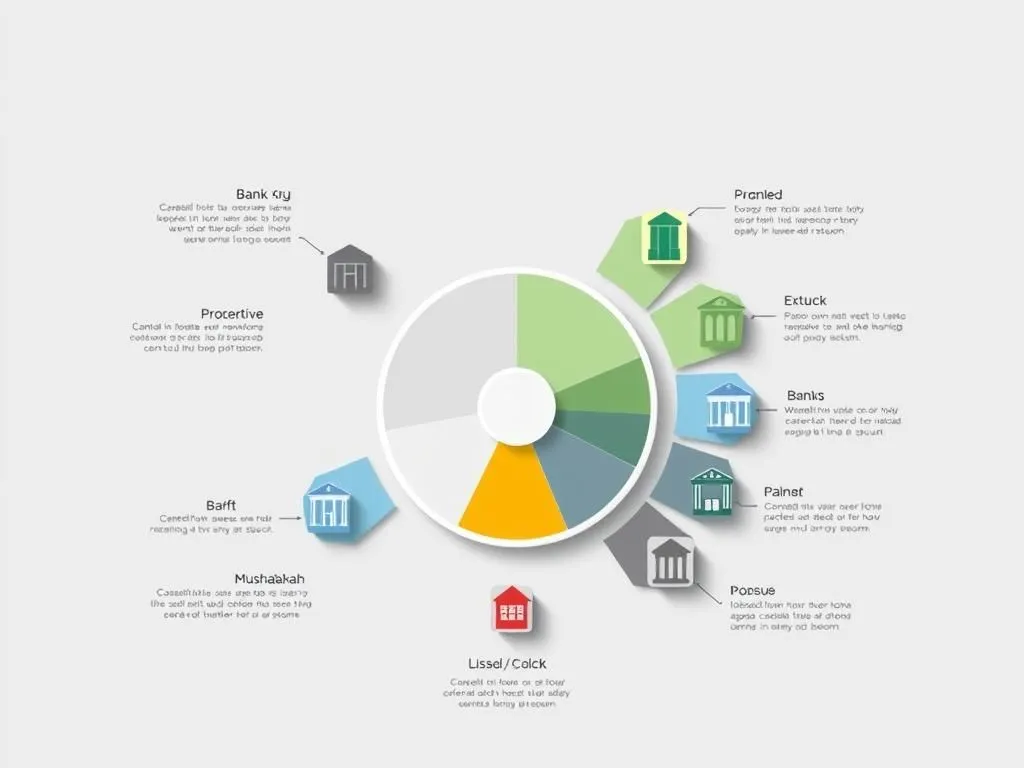
Distribution of Islamic mortgage contract types across Malaysian financial institutions
Calls for Reform: Making Islamic Financing Truly Ethical
Sharia scholars and customers alike have questioned contracts that mimic the interest-bearing structure of conventional products, emphasizing the need for clearer profit policies and more consumer-protective regulations9.
Best Islamic Home Loans in Malaysia (As of 2025)
Online comparison tools help borrowers evaluate options quickly and efficiently in today’s complex landscape10.
Websites like Property Guru and JYMS Properties empower prospective buyers with information and calculators for both conventional and Islamic solutions11.
Sustainable loans tied to green design and renewable infrastructure are also on the rise, influencing bank offerings12.
Frequently Asked Questions
Question: How is Islamic home financing different from conventional loans?
Answer: Islamic home financing avoids interest by using contracts like Murabahah, Ijara, or Musharakah, involving tangible assets and risk-sharing.
Question: Are Islamic mortgage plans more expensive than regular loans?
Answer: Pricing can be similar, but Islamic financing emphasizes ethical markup and transparency instead of compounding interest.
Question: Can non-Muslims apply for Islamic home financing?
Answer: Yes, Islamic loans are available to anyone interested in ethical, Shariah-compliant financial solutions, regardless of religion.
Disclaimer: The information is provided for general information only. JYMS Properties makes no representations or warranties in relation to the information, including but not limited to any representation or warranty as to the fitness for any particular purpose of the information to the fullest extent permitted by law. While every effort has been made to ensure that the information provided in this article is accurate, reliable, and complete as of the time of writing, the information provided in this article should not be relied upon to make any financial, investment, real estate or legal decisions. Additionally, the information should not substitute advice from a trained professional who can take into account your personal facts and circumstances, and we accept no liability if you use the information to form decisions.