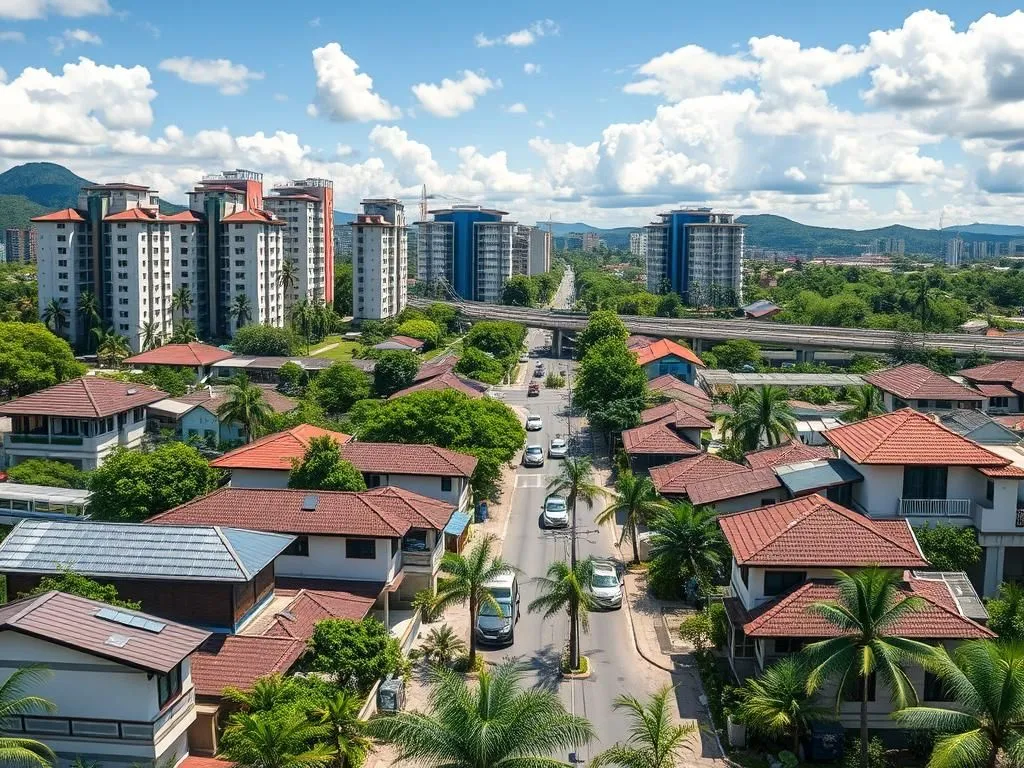

Malaysia Residential Property Market Analysis 2025: A Turning Point in Urban Growth and Sustainability
Key Takeaways
- Urban Planning Shift: Transit-oriented and mixed-use developments are influencing residential demand and investment patterns.
- Stabilized Pricing: After initial slowdowns, a stable growth curve is emerging heading into 2025.
- Environmental Alert: Flood risk is shaping both government zoning and buyer preferences for future-proof homes.
An Urban Revival: Growth Centres Reshape Demand
After years of slower momentum, property demand is experiencing a resurgence, especially in Malaysia's key urban zones such as Kuala Lumpur, Johor Bahru, and Penang. This uptick is linked to urban redevelopment initiatives, demographic shifts, and major infrastructure projects1.
Past Meets Future: Price History Hints at Stability Ahead
While many real estate markets faced inflationary pressure and global uncertainty, Malaysia’s residential sector has steadily regained momentum. Data shows that the market saw moderate recovery post-2023, paving the way for predictable, healthier growth in 20252.
Malaysia’s Strategic Bet: Urban Planning and Commercial Spillover
Malaysia's future-forward urban blueprint merges mobility, green infrastructure, and community living. Strategic planning and international commercial investments are spurring growth in nearby residential zones3.
2025 Property Outlook: From Luxury to Affordable Housing
The market is branching beyond premium homes, including affordable housing initiatives and mid-income-friendly condos. This shift reflects changing buyer priorities and incentives that cater to a wider audience4.
Market Forces Driving Growth and Diversification
Industrial hubs, logistical corridors, and green policy developments are shaping real estate decisions among developers and homeowners alike. These forces are creating ripple effects across secondary markets5.
Smart Decisions with AI and Forecasting Models
Advanced forecasting methodologies such as ARIMA and GARCH are empowering developers and investors to predict trends with greater accuracy. AI is now integrated into valuations, unit planning, and location assessments for smarter choices6.
The Hidden Weight: Challenges Still Hover Over the Market
Developers continue to tackle legacy overhang units and price-to-income mismatches. Rising costs add another layer of difficulty, demanding innovative layout strategies and policy alignment7.
Environmentally Sound or Floodbound?
Climate change and flood risk have become central to township planning. Efforts like flood-control drainage, revised zoning ordinances, and municipal awareness are gaining prominence8.

Urban transformation and infrastructure expansion are catalysts in reshaping the future of Malaysian housing
Forecast to 2033: Steady Growth, Tactical Choices
Forward projections suggest healthy yet controlled growth, with emerging cities and RM500K-and-below segments set to outperform. Inflation stabilization and green development are also fueling positive momentum9.
Investor Intelligence: Propelling Decision-Making via Data
Developers are embracing machine learning to cut inefficiency, reduce unit overhang, and improve ROI forecasting. These tools are now critical for meeting real-time buyer demands and sustainability goals10.
Frequently Asked Questions
Question: What areas in Malaysia see the highest residential property demand?
Answer: Key growth regions include Kuala Lumpur, Penang, and Johor Bahru due to urban redevelopment and infrastructure proximity.
Question: How has AI improved real estate planning in Malaysia?
Answer: AI enhances pricing predictions, buyer demand forecasting, unit size optimization, and flood risk analysis for better investment outcomes.
Question: Are environmentally resilient homes gaining traction?
Answer: Yes, especially in flood-prone regions. Developers are integrating drainage planning and elevation strategies in compliance with climate policies.
Disclaimer: The information is provided for general information only. JYMS Properties makes no representations or warranties in relation to the information, including but not limited to any representation or warranty as to the fitness for any particular purpose of the information to the fullest extent permitted by law. While every effort has been made to ensure that the information provided in this article is accurate, reliable, and complete as of the time of writing, the information provided in this article should not be relied upon to make any financial, investment, real estate or legal decisions. Additionally, the information should not substitute advice from a trained professional who can take into account your personal facts and circumstances, and we accept no liability if you use the information to form decisions.